We don't sell greenhouses.
We save you from buying the wrong one.
The independent guide to backyard greenhouses. What it actually costs once the base is in, which brands last 20 years, and which one rots, overheats, or blows apart in the first big wind.
Just starting your greenhouse research?
Already got a quote? Get a free read on it
Start here
Four useful paths. Pick the question you have now.
Sound familiar?
You've had the garden catalog open for a month.
It started with a good spring, or a bad one, and the thought that you could grow so much more with a greenhouse. Now you're deep in tabs at 11pm, trying to figure out whether the $8,000 glasshouse is worth five times the $1,600 kit, what “twin-wall polycarbonate” actually means, and whether that pretty aluminium-and-glass thing on Amazon will still be standing in three years.
Here's the thing. Most “best greenhouse” lists are written by companies that sell greenhouses, or by affiliate sites ranked by commission, and they put a $300 pop-up and a $15,000 glasshouse on the same shelf. The manufacturer pages show you the structure. Nobody puts the number that actually decides the project on the page: what it costs once the base, the anchoring, and the ventilation are in.
Because the kit price is not the project price. The base decides whether it lasts, the anchoring decides whether it survives a storm, and the ventilation decides whether your plants survive July. The product page mentions none of the three.
The base nobody budgeted for
An $8,000 glasshouse becomes a $12,000 to $18,000 project once you add the base, the site prep, the anchoring, the auto vents, and running power and water to it. The base alone runs $500 to $5,000, and it decides whether the structure lasts 20 years or racks and cracks in five. We lead with it instead of hiding it.
The July afternoon that cooked everything
Overheating kills more plants than cold. A closed greenhouse on a sunny 80-degree day can hit 120 inside in an hour, and one hot afternoon with no automatic vents can cook every seedling you own. Passive vents you have to remember to open are not enough. Auto openers and enough vent area are the difference between a greenhouse and a plant oven.
The kit that blew away
Thin single-wall poly that yellows and cracks in two seasons. A flimsy aluminium frame that bends in wind. No real base and no anchoring, so the whole thing is a kite. The same factory sells it under forty names with rented review counts. The cheapest greenhouse is the one you buy twice.
Close the other tabs
Everything you need, before you order anything.
We spent the hours so you don't have to. Read any of it free, and get the 3-email buyer's pack if you want the short version delivered.
What it actually costs all in
The real numbers for 2026. The structure, the base, the site prep, the anchoring, the automatic vents, and the heating and power runs nobody mentions. We break down real all-in budgets from $1,600 polycarbonate kits to $18,000 glasshouse projects.
Read the guide →Glass or polycarbonate, and what size fits your life
Glass gives you the clear view and does not yellow. Multi-wall polycarbonate retains more heat and won't shatter in hail. There's no "best" glazing, there's the right specification for your climate and how you'll use it. On size, buy one step up, but mind the heating cost of going too big.
Read the guide →What everyone gets wrong
The mistakes owners report over and over: too small, no auto vents, the wrong base, no anchoring, and glazing that yellowed. Plus the greenhouses we'd actually buy at each budget.
Read the guide →Just starting your greenhouse research?
Already got a quote? Get a free read on it
Before anything else
The page that isn't selling anything.
A greenhouse is a structure, and a badly based one is a kite. The most common catastrophic failure is a greenhouse that blows apart in a storm because it was never properly anchored, and the second is a cheap roof that caves under wet snow. Before you choose a model, understand how they fail and what a proper base and anchoring cost, because that is what keeps the whole thing standing. If you read one page on this site, read this one.
How greenhouses fail in wind, and anchoring done rightWhy listen to us? We don't have a greenhouse to sell you.
No skin in the game
We don't sell greenhouses. We're not a dealer, and no brand backs this site. When we say a $3,000 Palram/Canopia on a proper base beats a $20,000 glasshouse for how you actually garden, it's because it does.
We did the homework
We read the owner forums, the 15-year-glasshouse threads on Houzz and GardenWeb, the mine-blew-away posts on r/greenhouses, the manufacturer engineering specs, and the wind and snow-load standards. We track sourced weaknesses per brand, not just the catalog page.
We name the junk
Most sites won't tell you that dozens of Amazon and Wayfair kits are the same flimsy frame wearing invented names, with glazing that yellows and no way to anchor it. We will, out loud, with the pattern to spot it yourself. And when a heirloom glasshouse is overkill for your garden, we say that too.
The right greenhouse is the one still standing, and still full, 20 years from now.
We'll help you pick the one that will be.
When you're ready to buy
The brands worth your shortlist.
We reviewed the greenhouse market so you don't have to, from heirloom glasshouses to the mid-market picks that actually last. Here's where a serious buyer starts.
UK · Premium glass
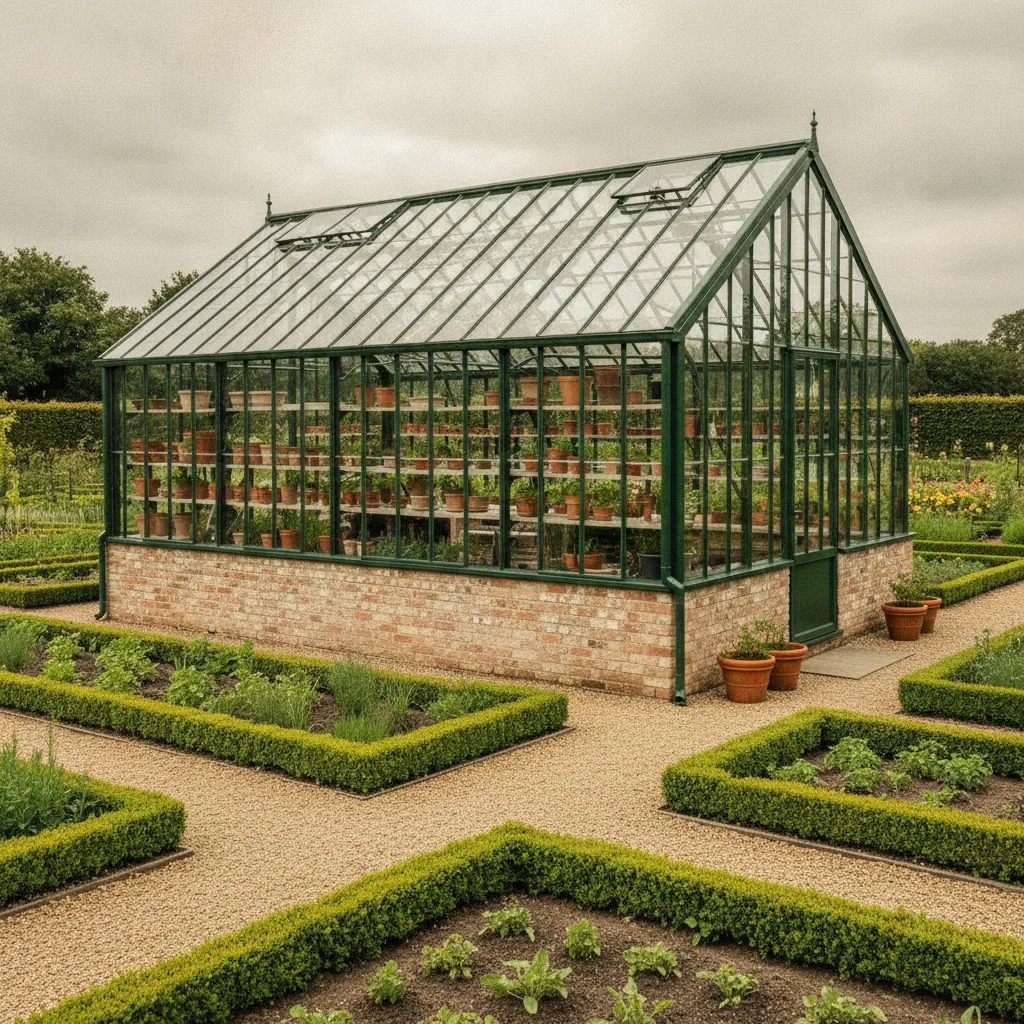
The heirloom glasshouse, built to last decades. If you'll keep it 20 years, it earns it.
Belgium · Premium glass
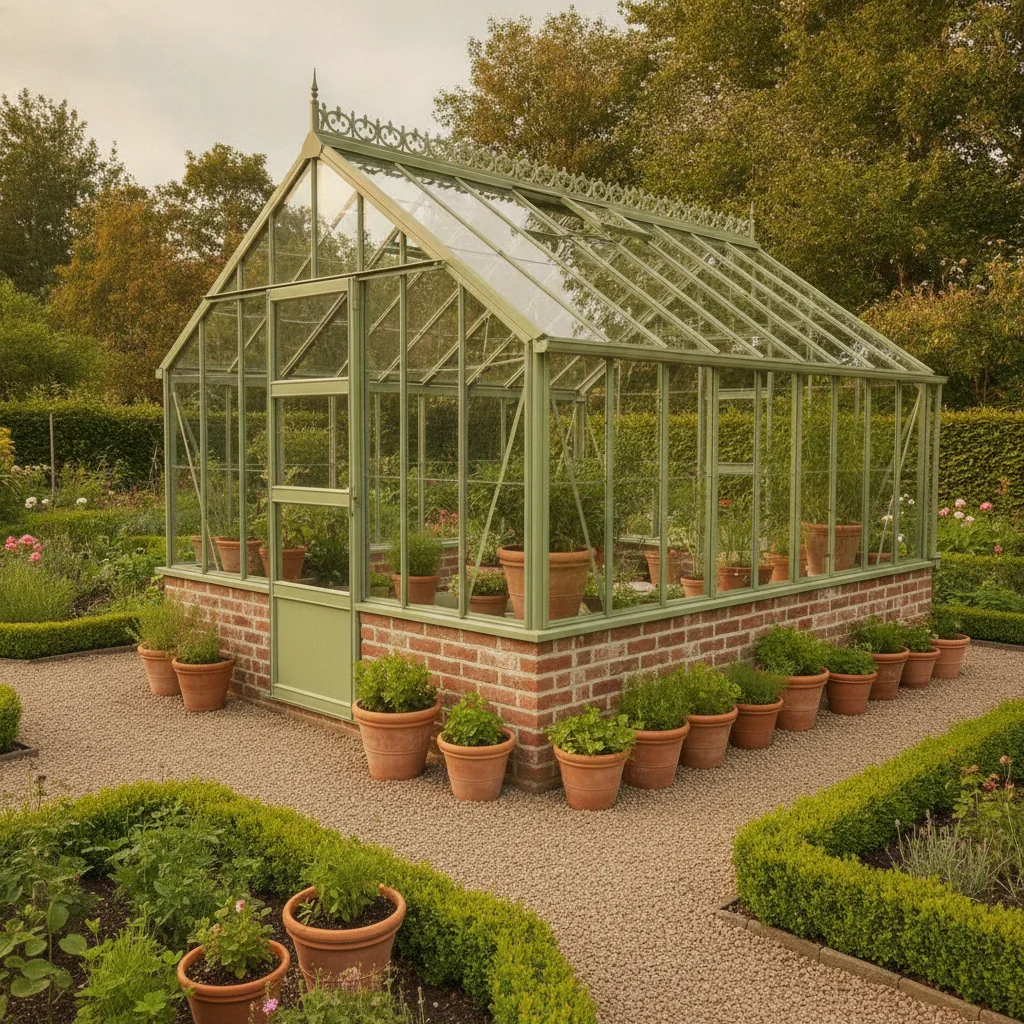
Belgian glass and a Victorian look at a more reachable premium price.
Mid · Polycarbonate
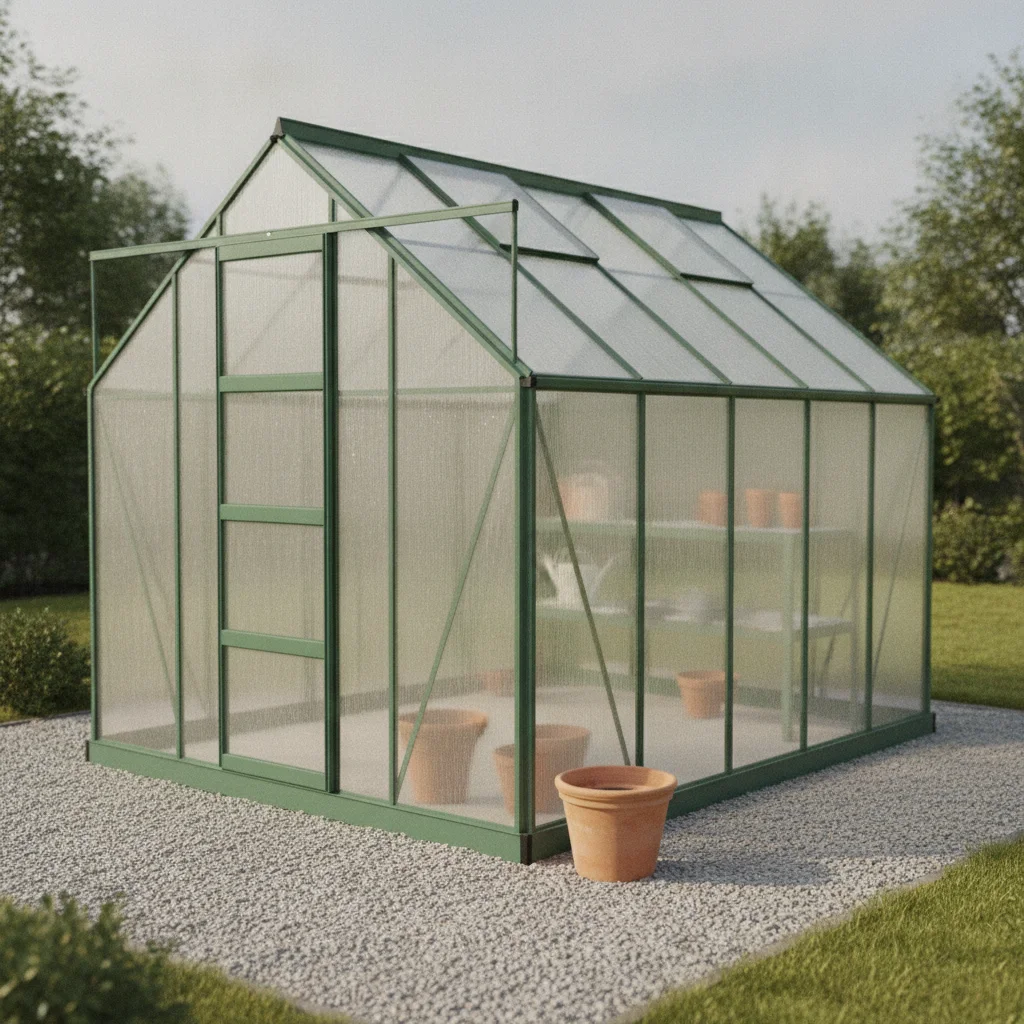
The value-that-lasts default. Twin-wall poly, aluminium frame, DIY-friendly.
USA · Mid
US-built and delivered assembled, with a finished floor and direct customer support.
Before you buy
Greenhouse questions, answered straight.
- How much does a backyard greenhouse actually cost in 2026?
- The kit price is not the project price. A $1,600 polycarbonate greenhouse can be a working setup for not much more, but an $8,000 glasshouse routinely becomes a $12,000 to $18,000 project once you add the base, site prep, anchoring, automatic vents, and running power and water to it. The base alone runs $500 to $5,000 depending on whether it is gravel-and-timber, a slab, or a brick dwarf wall. Budget the whole project, because the lower the kit price looks, the more of the real cost is hiding in the base and the install.
- Should I buy a glass or a polycarbonate greenhouse?
- There is no best glazing, only the right one for your climate and how you will use it. Glass gives a clear view, does not yellow, and can stay in service for decades, but it can shatter in hail and costs more. Multi-wall polycarbonate retains more heat, will not shatter, and shrugs off hail, but it diffuses light and eventually needs replacement. Alabama Extension publishes U-values of 1.13 for single glass and 0.65 for 8mm twin-wall polycarbonate, about 42 percent lower conductive heat loss through that cited panel. Compare the exact U-value, warranty, and replacement route on your quote.
- What size greenhouse do I actually need?
- Almost everyone buys too small and fills it within a year, so buy one size up from what you first think. The catch is heating: a bigger house costs more to keep warm in winter, so the right size balances the space you will grow into against the running cost of a house that is too big for how you actually garden. Decide what you will grow first (seed-starting, overwintering, or year-round), then size for that plus one step.
- Do I need to anchor a greenhouse, and will it survive wind and snow?
- Yes. The most common catastrophic failure is a greenhouse that blows apart in a storm because it was never properly anchored, and an unanchored or poorly-based greenhouse is a kite. Proper anchoring and a level, drained base are cheap compared to replacing the whole structure, and almost nobody quotes them. Snow is the other structural risk: a flat, cheap roof caves under wet snow, so roof pitch and glazing matter in snow country. Match the base, anchoring, and roof to your local wind and ground-snow-load, not to the catalog photo.
- Why does a greenhouse overheat, and do I need automatic vents?
- Overheating kills more plants than cold. A closed greenhouse on a sunny 80-degree day can climb past 120 inside within an hour, and one hot afternoon can cook every seedling you own. Passive vents you have to remember to open are not enough, because the day it matters you will be at work. Automatic vent openers and enough total vent area, roughly a fifth of the floor area as a starting point, are the difference between a greenhouse and a plant oven. Treat auto vents as a real line item, not an accessory.
- Do I need a permit for a greenhouse?
- Often, yes, and it is the line item that stops projects when it is discovered too late. Requirements are set locally: many municipalities need a permit above a certain size or for a permanent foundation, setback and property-line rules can dictate where it goes, and an HOA is a separate layer of approval. Call your building department before you buy, not after the base is poured. A small freestanding kit on no permanent foundation is more likely to be exempt, but confirm it rather than assume it.